
Table of Contents
Introduction
Welcoming horses onto your property or upgrading your existing equestrian facilities is an exciting project. However, it can quickly become overwhelming if you’re unsure where to begin. From choosing the right site and understanding planning regulations to meeting your horses’ needs, selecting suitable products, and managing your budget, there are many factors to consider.
This guide will help you ask the right questions and plan your project effectively, whether you are a private horse owneror an equestrian professional.

Step 1 – How to Define the Goals of Your Equestrian Project
Before anything else, clearly identify your requirements:
- How many horses do you plan to accommodate?
- What will the facilities be used for: leisure riding, competition, livery, or breeding?
- Do you prefer a simple setup (a field shelter and paddock) or a more comprehensive facility (stables, an arena, and an indoor riding school)?
This first step is essential to ensure your equestrian project is tailored to your lifestyle, your horses’ needs, and your long-term goals.
Step 2 – How to Choose the Right Site for Your Equestrian Facility
The choice of site and its layout are fundamental to the success of your equestrian project:
- Space for paddocks and fencing: Ideally, allow 1 hectare (2.47 acres) per horse for full-time grazing. If space is limited, there are effective alternatives such as paddocks, track systems, and rotational grazing, allowing fields to rest and recover.
- Ground conditions: Drainage, moisture levels, and ground stability are essential for ensuring the long-term durability of your equestrian facilities. In many cases, it is advisable to hire a groundworks contractor to prepare the concrete slab that will support your structure. Alternatively, depending on your budget, you may opt for concrete foundation pads. Ground stabilisation: Consider installing ground stabilisation grids in high-traffic areas to prevent mud, improve drainage, and create safer, more durable surfaces.
👉 Read our article on ground stabilisation grids. - Access to utilities: Plan ahead for water supply, electricity, and vehicle access, as these services are essential to the smooth operation of your equestrian facilities.
- Local planning constraints: Planning regulations, neighbouring properties, and local requirements can all affect the success of your project if they are not considered from the outset. If you do not own the land, demountable or modular structures are often the best option, helping to avoid potential legal or planning issues.
A well-chosen site reduces long-term maintenance costs while providing a safer, more comfortable environment for both your horses and your daily routine.
Step 3 – Which Essential Equestrian Facilities Should You Plan For?
Some facilities are essential :
- Horse stables: Allow 9 to 12 m² (97 to 129 sq ft) per horse, with good ventilation and plenty of natural light.
- Field shelters: Provide protection from wind, rain, and direct sunlight.
- Safe fencing: Strong, highly visible, and suitable for horses.
- Riding arena or lunge ring: Provide suitable drainage and an appropriate riding surface for regular training.
- Practical areas: Tack room, grooming area, and storage for hay and bedding.
Everything is possible—it all depends on your budget. At LCI Cheval, our timber and steel structures are manufactured in Ille-et-Vilaine, Brittany (France). We tailor each project to the dimensions and layout of your site, providing a bespoke solution.

Step 4 – How Can You Ensure Your Horses' Comfort and Well-Being?
A well-designed equestrian facility makes daily management easier and improves your horses’ quality of life:
- Choose fully opening fronts to make mucking out quicker and easier.
- Install automatic drinkers or secure water troughs.
- Maximise natural ventilation and daylight to reduce electricity costs while supporting horse welfare.
- Provide dedicated areas for horse care and rest.
👉 Our sales team can help you choose the products best suited to your needs.
👉 To learn more, you can also visit the EquuRES Label’s best practice blog, which features articles on horse welfare, stable design, and equestrian facilities: https://www.label-equures.com/bonnes-pratiques
Step 5 – What Budget Should You Plan for Your Equestrian Project?
The cost will vary depending on the scale of your project:
- Horse stable: €2,500 to €3,500 per unit, depending on the options and materials selected.
- Riding arena: Approximately €30 per m²
- Field shelter: From €1,000.
- Fencing: €5 to €20 per linear metre (excluding posts). Allow one post every 3 metres, plus insulators if you choose an electric fencing system.
💡 Always allow an additional 10–15% in your budget to cover unexpected costs such as drainage, utility connections, and planning permission.
Step 6 – Regulations and Safety: What Does the Law Say?
There are a few key requirements to keep in mind:
- Planning permission or a prior declaration may be required for certain structures, particularly those exceeding 20 m². 👉 Read our dedicated article for more information. Our team provides the plans required for your application.
- Minimum requirements for stable sizes and shelters.
- Mandatory horse identification and maintenance of a horse register.
- Public liability insurance and fire safety measures.
Step 7 – Planning and Maintaining Your Equestrian Facilities
A successful equestrian project is planned with the long term in mind:
Schedule your construction work at the right time of year (avoid winter where possible).
- Work with specialised professionals to ensure your project is covered by the appropriate insurance and structural warranties.
- Maintain your fencing, surfaces, and buildings on a regular basis. 👉 Read our article on maintaining equestrian facilities.
- Allow for future expansion or modifications so your facilities can adapt as your needs evolve.
Conclusion: A Practical Checklist
Before you get started, make sure you have considered:
✅ Clear objectives (number of horses, intended use, and budget).
✅ A suitable site (ground conditions, access, and planning requirements).
✅ Essential facilities (shelters, fencing, water supply, and storage).
✅ A realistic budget, including a contingency for unexpected costs.
✅ Compliance with regulations and safety requirements.
💡 Don’t overlook your project timeline. From requesting a quotation to groundworks and delivery, allow 3 to 6 weeks(excluding any planning permission process, which may extend the schedule). Also remember to factor in the time required for installation, whether carried out by professionals or completed yourself.
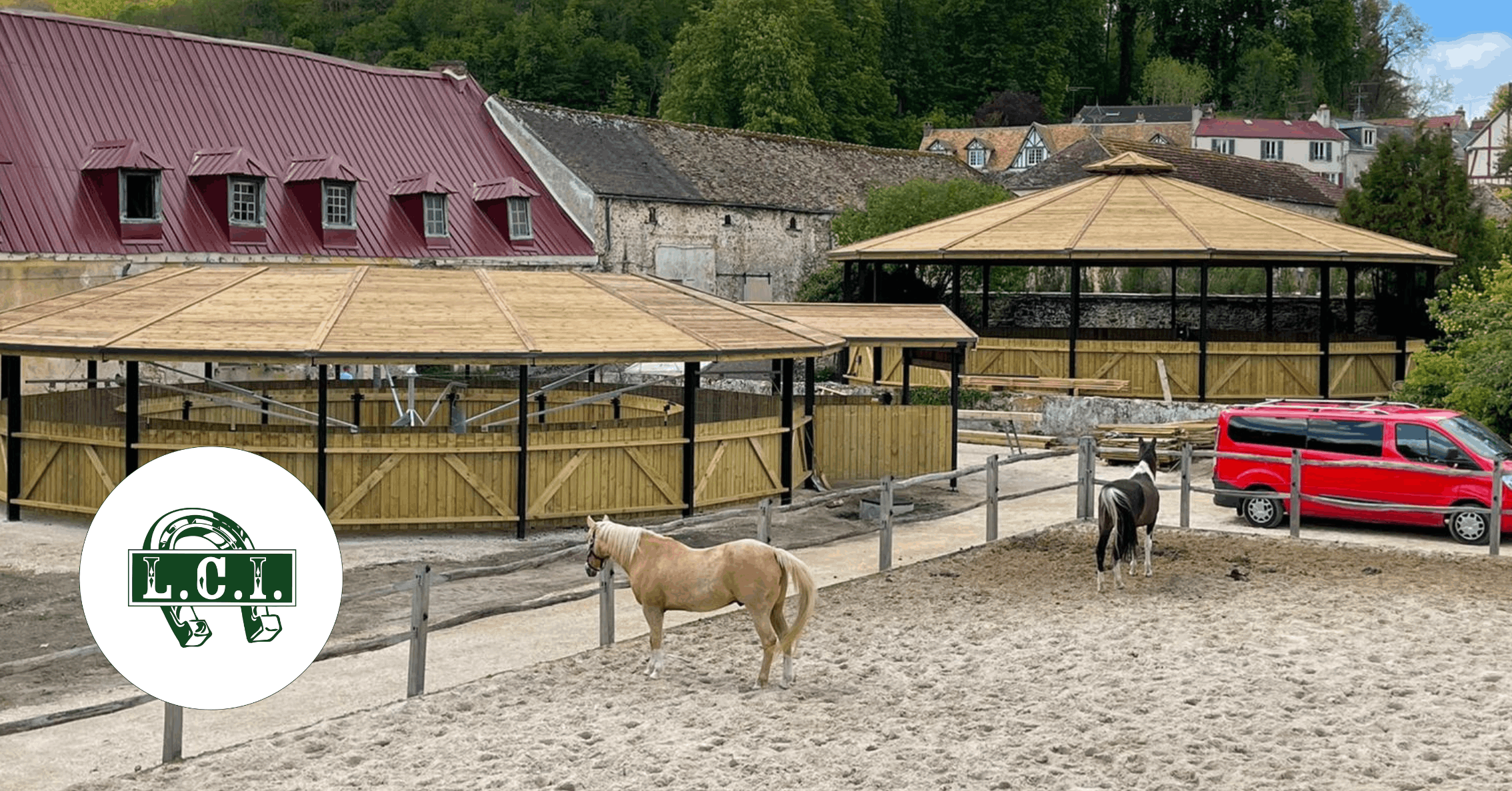
Every project is unique. At LCI Cheval, we support both private horse owners and equestrian professionals in designing and building durable, bespoke equestrian facilities tailored to their needs.
Get in touch today to discuss your project with our team !