
Horse fencing is one of the most important elements of any equestrian facility. It keeps horses safe, makes paddock management easier and contributes to the long-term durability of your infrastructure.
However, certain mistakes are still commonly made when installing horse fencing. They can lead to unnecessary costs, frequent repairs or even accidents.
Discover the 7 mistakes to avoid when installing horse fencing to create a safe, durable and reliable enclosure for your horses.
1. Choosing the Wrong Horse Fencing
Not all fencing is suitable for horses. Some materials can increase the risk of injury, while others lack visibility or strength. Horses are powerful and sometimes unpredictable animals, so suitable horse fencing must be strong, highly visible and safe.
Why Timber Is the Best Choice
Timber fencing remains the preferred choice for fields, paddocks and equestrian facilities. It offers excellent visibility and blends naturally into the surrounding landscape.
PVC Fencing: The Material of the Future?
In recent years, however, PVC fencing made from recycled plastic has begun to gain popularity in the market. More durable than timber, it will not rot, requires very little maintenance and closely replicates the appearance of wood. However, it is still significantly more expensive than timber.
Don’t Forget Electric Fencing
Even with a strong fence, electrification remains essential. Horses often develop the habit of chewing timber rails. If you want to keep your fencing in good condition, add electric wire to protect your infrastructure.
Likewise, even if you choose PVC fencing, electrification remains the safest and most effective deterrent. It is essential for your horses’ safety.
Avoid Barbed Wire and Creosote-Treated Timber
Barbed wire and creosote-treated timber are practices best left in the past. Barbed wire can cause serious cuts and injuries, making it completely unsuitable for horses. It is no longer used by professional installers and should be avoided altogether to protect the welfare of horses and other animals.
The same applies to creosote-treated timber. As it is toxic to horses, this type of treatment is no longer used. Instead, choose timber that has been pressure-treated with chrome-free preservative salts.
Give Your Fence Maximum Protection!
2. Overlooking the Quality of Fence Posts
Fence posts are the foundation of your horse fencing.
Fence posts are the foundation of your fencing. Even with high-quality rails, a fence installed on weak posts will quickly lose its effectiveness. To ensure long-lasting performance, choose the right timber species, such as chestnut or pine.
Poor-quality posts can warp, rot prematurely or become unstable over time. That is why it is essential to choose strong, treated fence posts designed to withstand outdoor conditions.
Investing a little more at the outset can help you avoid costly repairs in the long run. Be sure to choose the right post diameter too. Ideally, use 120 mm diameter posts, as they provide a stronger fixing for hardware, offer better support for timber rails and are more durable than smaller diameter posts.
3. Underestimating Fence Height
A fence that is too low can pose a significant safety risk. The ideal height should be based on the size, age and temperament of your horses. A fence that is not high enough may encourage some horses to jump over it or lean heavily against the rails. To ensure maximum safety, assess the specific needs of your horses and your facility before deciding on the final fence height.
Type of Horse | Height at the Withers | Recommended Fence Height | Recommended Number of Rails |
Shetland Pony | < 1.10 m (3 ft 7 in) | 0.90 to 1.00 m (2 ft 11 in to 3 ft 3 in) | 2 |
B & C Pony | 1.10 to 1.30 m (3 ft 7 in to 4 ft 3 in) | 1.00 to 1.10 m (3 ft 3 in to 3 ft 7 in) | 2 to 3 |
D Pony | 1.30 to 1.48 m (4 ft 3 in to 4 ft 10 in) | 1.10 to 1.20 m (3 ft 7 in to 3 ft 11 in) | 3 |
Riding Horse | 1.50 to 1.70 m (4 ft 11 in to 5 ft 7 in) | 1.30 to 1.40 m (4 ft 3 in to 4 ft 7 in) | 3 |
Large Sport Horse | 1.70 to 1.85 m (5 ft 7 in to 6 ft 1 in) | 1.40 to 1.50 m (4 ft 7 in to 4 ft 11 in) | 3 |
Draft Horse | > 1.65 m (5 ft 5 in) | 1.40 to 1.50 m (4 ft 7 in to 4 ft 11 in) | 3 |
Stallion | All Heights | 1.50 to 1.60 m (4 ft 11 in to 5 ft 3 in) | 3 to 4 |
Young Horses / Weanlings | Variable | 1.30 to 1.50 m (4 ft 3 in to 4 ft 11 in) | 3 |
Please note: add 50 cm (20 in) to the recommended fence height to allow for installation below ground level (at least 50 cm / 20 in in the ground).
4. Leaving Gaps That Are Too Wide Between Fence Posts or Rails
The spacing between fence rails is essential. Gaps that are too wide may allow a horse to put its head or a leg through the fence, significantly increasing the risk of injury.
A well-designed fence helps minimise these risks and improves the day-to-day safety of your horses.
3-Rail Horse Fencing (The Most Common Option)
Rail | Height to the Top of the Top Rail |
Bottom Rail | 45 to 50 cm (18 to 20 in) |
Middle Rail | 85 to 95 cm (33 to 37 in) |
Top Rail | 135 to 140 cm (53 to 55 in) |
This provides a gap of approximately 40 to 45 cm (16 to 18 in) between each rail.
2-Rail Horse Fencing (For Ponies or Light Boundary Fencing)
Rail | Height to the Top of the Top Rail |
Bottom Rail | 45 to 50 cm (18 to 20 in) |
Top Rail | 95 to 110 cm (37 to 43 in) |
Spacing: 45 to 60 cm (18 to 24 in), depending on the size of the ponies.
4-Rail Horse Fencing (For Stallions, Young Horses and Stud Farms)
Rail | Height to the Top of the Top Rail |
Rail 1 | 40 cm (16 in) |
Rail 2 | 75 cm (30 in) |
Rail 3 | 110 cm (43 in) |
Rail 4 | 145 to 160 cm (57 to 63 in) |
Spacing: 30 to 40 cm (12 to 16 in) between each rail.
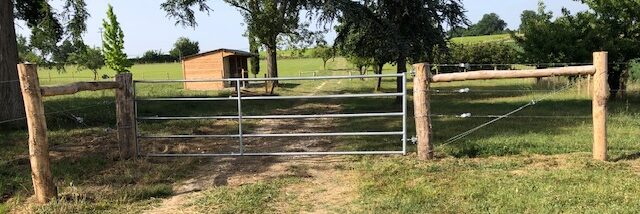
5. Forgetting About Access Points and Gates
When planning a fence, most of the attention is often focused on the fence line itself. However, access points are just as important.
A gate that is poorly positioned or too narrow can make it difficult for horses, agricultural machinery or maintenance vehicles to pass through.
It is best to plan traffic flow from the outset of the project.
Well-planned access points make day-to-day use of your facilities much easier.
We can, of course, help you choose the most suitable solutions to suit your layout and requirements.
6. Neglecting Future Maintenance
A fence should remain effective for many years. To achieve this, maintenance should be considered from the moment it is installed.
The choice of materials, fixings and protective treatments has a direct impact on the overall durability of the fence.
A fence designed to withstand the elements will require less maintenance and retain its appearance for longer.
For more maintenance advice, take a look at our dedicated article !
7. Focusing Only on the Lowest Price
The cost of a fence is an important consideration. However, it should never be the only one.
A cheaper fence may cost less to buy initially, but it can lead to more repairs, maintenance and replacements over time.
By contrast, a high-quality fence is a long-term investment that protects your horses and adds value to your property. Over the years, it often proves to be the more cost-effective option.
Conclusion
Installing horse fencing is not something that should be left to chance.
Every detail matters: the choice of materials, the quality of the posts, the fence height, the access points, and the overall design of the project.
By avoiding these seven common mistakes, you can improve the safety of your horses while ensuring the long-term durability of your facilities.
At LCI Cheval, we help horse owners, riding centres and equestrian professionals create robust, attractive fencing solutions tailored to the specific needs of their site.
Planning an equestrian project? Our team is here to provide expert advice and help you find the solution that best suits your needs.